Small Business Trends 2026: How Small Founders Are Outsmarting Big Companies
Why Small Businesses Are Winning in 2026
Small business trends in 2026 are shifting faster than ever before. What used to take large corporations years to adopt is now being implemented by small founders in weeks using AI, automation, and digital-first strategies. The gap between small businesses and big companies is no longer about budget alone, but speed, adaptability, and smart execution. In 2026, the founders who win are not the ones with the biggest teams, but the ones who use the right tools, target the right niche, and move faster than everyone else.
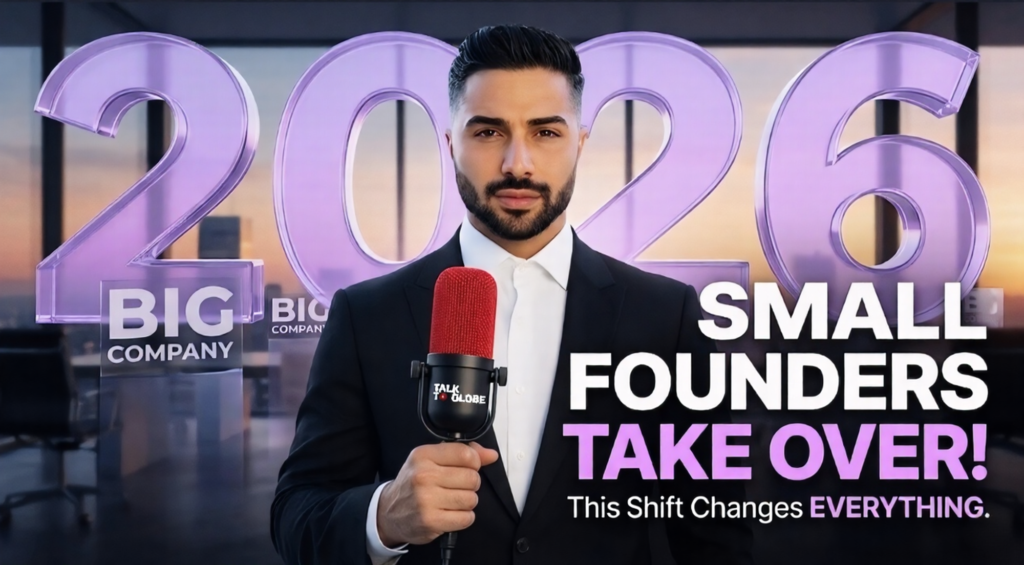
Small businesses are outperforming big companies in 2026 for one reason:
They control attention, while big companies are still optimizing operations.
That’s the shift. Not the
funding.
team size.
technology.
Why Small Founders Are Winning (While Big Companies Are Slowing Down)
Big companies are not weak, they are slow.
They rely on:
- long decision chains
- internal approvals
- risk avoidance
Small founders don’t.
They:
- launch faster
- test ideas instantly
- adapt in real time
In today’s market:
- speed beats scale
- clarity beats complexity
- execution beats planning
Why Most Small Businesses Still Fail
Let’s be direct, most small businesses don’t fail because of bad products.
They fail because:
- nobody discovers them
- nobody remembers them
- nobody trusts them
They spend time improving the product…
While competitors focus on:
- visibility
- distribution
- content
In 2026, invisibility is the real risk.
The Real Reason Visibility Beats Product Quality
This is uncomfortable, but true. A visible average product will outperform an invisible great product.
Because:
- customers can only buy what they see
- trust is built through exposure
- repetition creates authority
That’s why:
- content wins
- distribution wins
- attention wins
What Changed Between 2024 and 2026
This shift didn’t happen randomly. Three structural changes reshaped the market:
1. Content Became the Growth Engine
Businesses that publish consistently:
- rank on search engines
- get picked by AI tools
- attract inbound traffic
Content is no longer marketing.
It is distribution.
” One example of this shift can be seen in how independent operators are building content systems that outperform established media companies. Xaryaab Alee, a young AI content strategist and backlink specialist, has quietly built a reputation by helping websites rank where it matters most. His work focuses on high-intent SEO structures rather than volume, and in multiple cases, his articles have reached the first page of Google and appeared in AI-driven search summaries. What makes this more interesting is not just rankings, but consistency. Instead of chasing trends, he builds content ecosystems that compound authority over time, allowing even newer websites to compete directly with major publications. “
2. AI Removed Execution Barriers
What used to require:
- writers
- designers
- analysts
can now be done faster by one operator.
This means:
- execution is easier
- competition is higher
So the real advantage becomes, who thinks better, not who works harder
3. Trust Shifted to Individuals
People trust:
- founders
- creators
- visible operators
More than:
- corporate brands
- polished ads
- generic messaging
This is why personal-led businesses are scaling faster.
The Collapse of the Old Business Model
Old Model
- build product
- raise capital
- hire team
- search for customers
Slow. Expensive. Risky.
New Model
- build attention
- grow audience
- understand demand
- launch into trust
Faster. Leaner. More predictable.
Why Unknown Founders Are Outranking Big Brands
Search engines now reward:
- relevance
- intent
- structure
Not just authority.
That means, a focused founder publishing:
- niche-specific content
- problem-solving articles
- consistent updates
can outrank large websites, even with a new site.
The Exact Growth System Modern Founders Are Using
This is the real pattern behind fast growth.
Step 1: Start Narrow
Not “business”
Not “marketing”
But:
- one niche
- one audience
- one clear problem
Step 2: Build Attention Through Content
Not random posts.
Structured:
- SEO articles
- content clusters
- consistent publishing
This creates long-term traffic.
Step 3: Understand Real Demand
Instead of guessing, founders analyze:
- what people search
- what clients ask
- what problems repeat
This removes risk.
Step 4: Launch Focused Solutions
Not multiple offers. One clear solution that:
- solves a real problem
- is easy to understand
- delivers results
Step 5: Scale Through Trust
Once trust is built:
- conversions increase
- referrals grow
- authority compounds
Where Real Operators Are Winning in 2026
This is what is actually working right now:
- SEO content systems generating consistent traffic
- LinkedIn authority driving inbound clients
- niche newsletters building loyal audiences
- hybrid models combining content and services
The pattern is simple:
Attention → Trust → Revenue
Why Big Companies Struggle to Compete Here
Big companies are optimized for:
- stability
- scale
- risk control
Not speed.
Small founders are optimized for:
- execution
- experimentation
- adaptability
And in a fast-moving market, speed wins.
The Real Currency of 2026
It’s not capital, not connections, it’s:
- attention
- trust
- distribution
If you control these three, you control growth.
Why Most People Will Still Miss This
Because they are stuck in old thinking:
- waiting for perfect ideas
- building before validating
- ignoring distribution
While others are:
- publishing
- testing
- adjusting
The gap is growing fast.
Conclusion: The Quiet Takeover Is Already Happening
The next industry leaders are not being announced, they are being built quietly.
- solo founders
- small teams
- focused operators
By the time most people notice: they already dominate their niche.
FAQs
1- What are the top small business trends in 2026?
The top trends include AI automation, digital-first operations, niche-focused branding, remote teams, and data-driven decision making.
2- How are small businesses competing with big companies in 2026?
Small businesses are competing by moving faster, using AI tools, focusing on niche markets, and building stronger customer relationships than large corporations.
3- Is AI important for small businesses in 2026?
Yes, AI is becoming essential for small businesses in 2026 for marketing, customer support, content creation, and automating daily operations.
4- What is the future of small business growth?
The future of small business growth is digital-first, heavily automated, and focused on personalization rather than mass marketing.
5- What challenges do small businesses face in 2026?
The biggest challenges include rising competition, digital transformation costs, customer retention, and adapting to fast-changing technology.
