Kevin Warsh Just Took Over the Federal Reserve. Here’s What Higher Interest Rates Could Mean for Your Money in 2026
The most powerful person in global finance is no longer Jerome Powell.
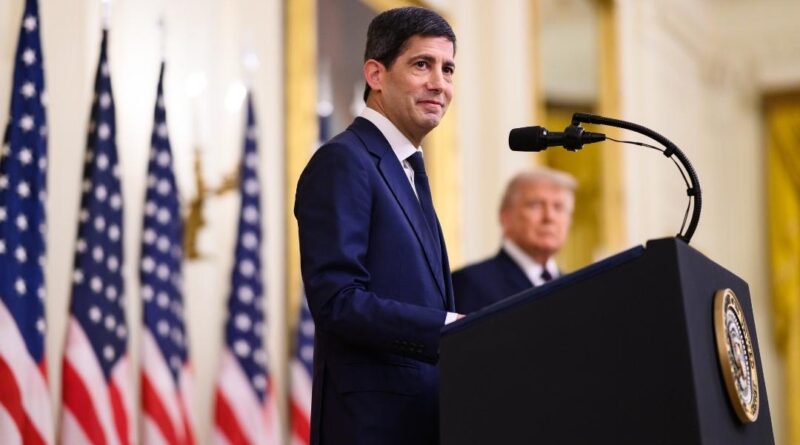
Kevin Warsh has officially become chairman of the Federal Reserve, taking control of the institution that influences everything from mortgage rates and business loans to stock market valuations and global capital flows. Warsh was confirmed by the Senate in May and formally took office on May 22, becoming the new leader of America’s central bank.
For most Americans, a leadership change at the Federal Reserve sounds like another Washington headline. In reality, it affects almost every financial decision people make.
The cost of borrowing money, buying a home, expanding a business, financing equipment, investing in stocks, and even job creation can all be influenced by decisions made inside the Federal Reserve.
What makes this transition especially important is timing.
Warsh is taking over while inflation remains above the Fed’s long-term target, energy prices remain elevated, and markets are suddenly debating whether the next move could be a rate hike instead of a rate cut. Reuters reports that stronger labor-market data and persistent inflation have increased expectations that the Federal Reserve may need to keep policy tight for longer than previously expected.
For business owners, investors, and consumers, that changes the conversation entirely.
Quick Answer
Kevin Warsh is unlikely to rush into major interest-rate cuts.
Inflation remains above the Federal Reserve’s target, energy prices continue creating pressure throughout the economy, and recent economic data suggests the economy remains stronger than expected. Most analysts expect interest rates to remain elevated through much of 2026 unless inflation falls significantly.
| Key Factor | Current Situation | Why It Matters |
| Inflation | Above Fed target | Limits rate-cut potential |
| Oil Prices | Elevated | Adds inflation pressure |
| Job Market | Strong | Reduces urgency for cuts |
| Mortgage Rates | High | Impacts housing demand |
| Business Lending | Expensive | Slows expansion plans |
Why This Fed Transition Matters More Than Most
Most Federal Reserve transitions happen quietly.
Markets acknowledge the change, economists publish a few reports, and attention quickly shifts elsewhere. This transition is different because Warsh inherits an economy that refuses to provide easy answers.
Inflation is no longer exploding, but it is not fully defeated either.
The labor market remains surprisingly resilient. Consumer spending continues despite higher borrowing costs. Businesses are still investing, although more cautiously than before. At the same time, geopolitical tensions continue affecting energy markets and global supply chains.
That combination creates a difficult environment for any central banker.
Cut rates too early and inflation could accelerate again.
Keep rates too high for too long and economic growth could weaken.
The next Federal Reserve chairman must navigate between those two risks while maintaining confidence in the institution itself.
Who Is Kevin Warsh?
Kevin Warsh is not a newcomer to monetary policy.
Before becoming chairman, he served as a member of the Federal Reserve Board of Governors from 2006 to 2011, including during the global financial crisis. Following his time at the Fed, he worked at Stanford University’s Hoover Institution and remained active in economic policy discussions.
His background combines Wall Street experience, public policy expertise, and firsthand knowledge of how central banks operate during periods of economic stress.
Supporters argue this experience makes him well-positioned to lead during uncertain times.
Critics worry that political pressure surrounding interest-rate decisions could complicate perceptions of Federal Reserve independence.
That debate became especially intense during his confirmation process, which resulted in one of the narrowest confirmation votes ever for a Federal Reserve chair.
Regardless of political opinions, one fact is clear:
Markets will scrutinize every statement Warsh makes during his first year in office.
The Inflation Problem Has Not Disappeared
The biggest challenge facing the Federal Reserve remains inflation.
Although inflation has fallen significantly from peak levels, it remains above the Fed’s long-term objective of 2%.
Recent data has reinforced concerns that inflation may prove more persistent than many economists expected. Reuters notes that inflation remains elevated while policymakers increasingly focus on preventing another inflation surge.
Several factors continue contributing to inflationary pressure:
- Higher energy costs
- Elevated housing expenses
- Strong labor demand
- Ongoing geopolitical disruptions
- Supply-chain adjustments
None of these issues can be solved overnight.
That reality limits how aggressively the Federal Reserve can lower interest rates.
Why Oil Prices Matter So Much
Oil remains one of the most important inflation drivers in the global economy.
When energy costs rise, transportation becomes more expensive. Manufacturing costs increase. Shipping prices climb. Businesses eventually pass those costs to consumers.
This is one reason investors closely monitor geopolitical events affecting energy markets.
Even moderate increases in oil prices can ripple through the economy and complicate the Federal Reserve’s inflation-fighting efforts.
For Warsh, elevated energy costs create an additional challenge because monetary policy cannot directly increase oil production or resolve geopolitical tensions.
The Fed can only influence demand through interest rates.
What Businesses Should Watch Next
Business owners often focus on whether rates go up or down.
A more important question is how long rates remain elevated.
If borrowing costs stay higher for longer, companies may delay expansion projects, postpone hiring plans, or reconsider capital investments.
Businesses should pay close attention to:
- Inflation reports
- Employment data
- Consumer spending trends
- Energy prices
- Federal Reserve meeting statements
These indicators will likely shape policy decisions throughout the remainder of 2026.
Companies that rely heavily on financing should also review debt structures and refinancing plans before major policy shifts occur.
What This Means for Mortgage Rates
Homebuyers hoping for dramatically lower mortgage rates may need patience.
Mortgage rates are influenced heavily by Treasury yields and broader market expectations regarding inflation and Federal Reserve policy.
If investors believe inflation will remain elevated, mortgage rates may stay relatively high even if the Federal Reserve eventually begins cutting rates.
For homeowners, this means affordability challenges may continue longer than expected.
For real estate investors, financing costs remain a critical factor in evaluating new opportunities.
What Investors Should Expect
Investors face a more complicated environment than they did a year ago.
The assumption that multiple rate cuts would automatically support stock prices has become less certain.
Instead, markets must balance several competing forces:
| Positive Factors | Negative Factors |
| Strong job market | Persistent inflation |
| Corporate earnings growth | Elevated rates |
| AI-driven productivity | Energy-price volatility |
| Consumer resilience | Geopolitical risks |
This does not mean markets cannot move higher.
It means investors should prepare for greater volatility as markets evaluate how Warsh intends to lead the Federal Reserve.
The Bigger Question Facing Warsh
The challenge facing Kevin Warsh goes beyond inflation and interest rates.
The Federal Reserve’s credibility depends on maintaining confidence that monetary policy decisions are driven by economic conditions rather than political pressure.
Every Federal Reserve chairman eventually faces moments where economic realities conflict with political expectations.
Warsh’s leadership will likely be judged not only by inflation and growth outcomes but also by how effectively he preserves confidence in the institution itself.
That challenge begins immediately.
With inflation still elevated, markets increasingly discussing the possibility of future rate hikes, and businesses looking for clarity, the decisions made during Warsh’s first year could shape the economic trajectory of 2026 and beyond.
Frequently Asked Questions
Who is Kevin Warsh?
Kevin Warsh is the chairman of the Federal Reserve. He previously served as a Federal Reserve governor from 2006 to 2011 and officially became chairman in May 2026.
When did Kevin Warsh become Fed Chair?
Warsh officially took office as chairman of the Federal Reserve on May 22, 2026.
Will Kevin Warsh cut interest rates in 2026?
Current economic conditions make rapid rate cuts unlikely. Inflation remains above target, and policymakers continue monitoring inflation risks.
Why are investors paying attention to Kevin Warsh?
As Federal Reserve chairman, Warsh influences monetary policy, interest rates, financial markets, and economic growth expectations.
How does the Federal Reserve affect mortgage rates?
Federal Reserve policy influences Treasury yields and borrowing costs throughout the economy, which indirectly affect mortgage rates.
Could interest rates rise again?
Some analysts believe another rate hike remains possible if inflation remains elevated or accelerates unexpectedly.
What should businesses watch in 2026?
Businesses should monitor inflation reports, employment data, energy prices, consumer spending, and Federal Reserve communications.
What is the biggest challenge facing Kevin Warsh?
Balancing inflation control, economic growth, and confidence in Federal Reserve independence will likely define his first year as chairman.
