
Is Pakistan in the Middle East Now? Yes or No (2026 Answer)
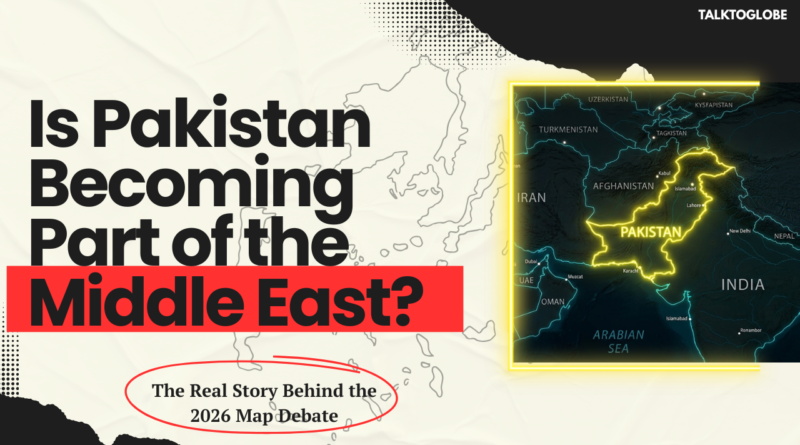
Pakistan is not in the Middle East, it is a South Asian country. However, right now in 2026, its growing role in regional politics and ties with Gulf nations and involvement in US–Iran tensions are making many people think otherwise. This shift is not about geography, but about influence, strategy, and global positioning.
Is Pakistan in the Middle East now? (Quick Answer)
No, Pakistan is not in the Middle East. It is located in South Asia. The confusion comes from its increasing political, economic, and strategic involvement in Middle Eastern affairs.
Why This Question Is Suddenly Trending ?
Over the past few months, a strange question has started trending across search engines and social platforms.
Many people are searching: is Pakistan in the Middle East now? The answer is no, Pakistan remains part of South Asia in 2026.
Pakistan’s growing involvement in Middle Eastern affairs is not just political, it is deeply economic. Trade flows, energy partnerships, and regional investments are becoming more interconnected, shaping how capital moves across borders. According to the International Monetary Fund global economic outlook, regional cooperation and geopolitical alignment now play a critical role in long-term economic stability.
The Straight Answer Most Articles Miss
Pakistan is not part of the Middle East. It is geographically located in South Asia, and that classification has not changed.
Many people also ask: Is Pakistan part of the Middle East?
The answer remains no from a geographic perspective.
However, what has changed is how Pakistan is being perceived globally. Its increasing involvement in Middle Eastern diplomacy and economics is creating a blurred image in the minds of audiences.
So while the map hasn’t changed, the narrative around Pakistan definitely has.
Why This Debate Is Rising in 2026
This confusion did not appear randomly. It is linked to real geopolitical shifts that are unfolding right now.
One of the biggest reasons is Pakistan’s growing role in discussions involving the United States and Iran. As tensions rise, countries that can act as intermediaries become extremely important. Pakistan is now one of those countries.
At the same time, its economic ties with Gulf nations like Saudi Arabia and the UAE continue to deepen. Trade, investment, and workforce connections are strengthening year by year, making Pakistan more integrated into Middle Eastern systems.
Media coverage adds another layer to this confusion. When global outlets discuss regional tensions, Pakistan is often mentioned alongside Middle Eastern countries, which leads audiences to assume it belongs to that region.
Geography vs Strategy: Where People Get Confused
The core of this debate comes from mixing geography with geopolitics.
| Aspect | Reality |
| Geography | Pakistan is part of South Asia |
| Politics | Increasing involvement in Middle East affairs |
| Economy | Strong ties with Gulf countries |
| Strategy | Acting as a connector between regions |
Geography is fixed. It does not change based on politics or economics. But strategy and influence are fluid. They evolve based on global conditions, and that is exactly what is happening here.
What Defines the Middle East Region ?
The Middle East is not a strictly defined geographic boundary, but it generally includes countries in Western Asia and the Gulf region, such as Iran, Iraq, and Saudi Arabia. Pakistan is not included in these definitions. However, its proximity and relationships with these countries make it highly relevant to regional discussions.
This is why it appears connected, even though it is not officially part of the region.
Why Pakistan’s Role Is Expanding
Pakistan’s increasing importance is not accidental. It is driven by a combination of location, diplomacy, and timing. Its geographic position places it close to key conflict zones. Its diplomatic approach allows it to maintain relationships with multiple sides. And the current global situation demands countries that can act as intermediaries.
All of this gives Pakistan a unique position that few countries can match.
Economic Impact of This Shift
Pakistan’s growing involvement in Middle Eastern affairs is also creating global economic opportunities.
| Area | Impact |
| Trade | Increased cooperation with Gulf economies |
| Investment | Rising financial inflows from regional partners |
| Energy | Stronger connections with oil-producing nations |
| Workforce | Continued migration and remittance growth |
These factors are important not just for Pakistan, but for the global economy as well. Institutions like the International Monetary Fund track these developments closely because of their broader impact.
Why Perception Is Changing Faster Than Reality
The real reason behind this debate is perception.
When a country is consistently involved in another region’s politics, economy, and media coverage, people begin to associate it with that region. Over time, this creates confusion between actual geography and perceived alignment.
Pakistan is now at that stage where its influence is expanding faster than people’s understanding of its position.
What This Means Going Forward
This trend is unlikely to slow down. Pakistan will continue to play a larger role in Middle Eastern affairs, especially in diplomacy and regional stability. However, its geographic identity will remain the same. It will stay part of South Asia, even as its influence expands beyond it. This creates a dual identity that is becoming more common in modern geopolitics.
The Bigger Shift
• The world is moving toward a system where influence matters more than geography.
• Countries are no longer defined only by where they are located. They are defined by where they are involved.
• Pakistan is a clear example of this shift. It is not changing its location, but it is expanding its reach.
Conclusion:
Pakistan is not becoming part of the Middle East. But it is becoming more important to it. This is not about redrawing maps. It is about changing roles. Understanding that difference is what separates surface-level content from real insight.
So, Pakistan is not part of the Middle East geographically.
FAQs
Is Pakistan in the Middle East in 2026?
No, Pakistan is not in the Middle East. It is located in South Asia.
Is Pakistan part of the Middle East yes or no?
No, Pakistan is not part of the Middle East geographically.
Why do people think Pakistan is in the Middle East?
Because of its strong ties with Gulf countries and involvement in regional politics.
Is Pakistan in Asia or the Middle East?
Pakistan is in South Asia, which is part of the Asian continent.
Has the world map changed in 2026?
No, there has been no official change in geographic regions.
Does Pakistan have connections with the Middle East?
Yes, Pakistan has strong economic and political connections with Middle Eastern countries.
Final Answer
Pakistan is not part of the Middle East. It remains a South Asian country, although its influence in Middle Eastern politics is increasing in 2026.
