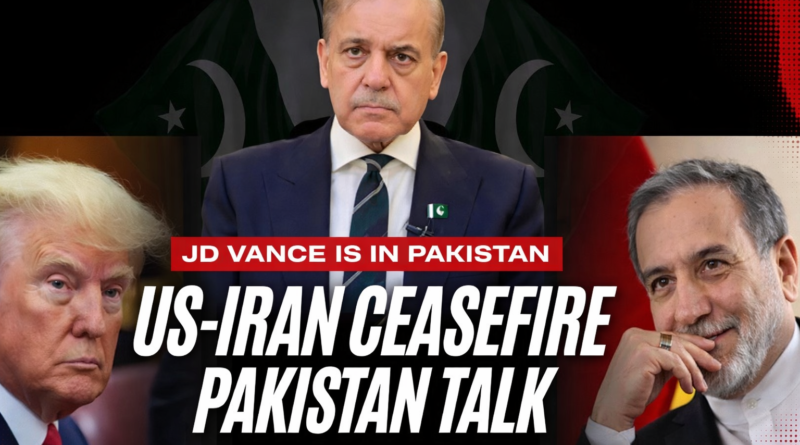
US-Iran Ceasefire 2026: What the Pakistan Peace Talks Mean for Oil, Global Trade and Your Business
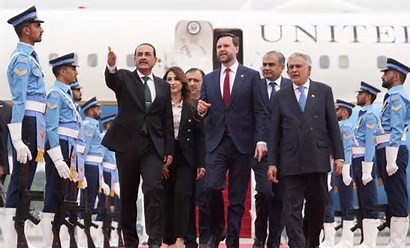
| LAST UPDATED: 1 Hour ago – 12 APRIL, 2026 The US-Iran ceasefire announced on April 8, 2026, and brokered by Pakistan, has opened the first direct US-Iran peace talks since the 1979 Islamic Revolution. As negotiations continue in Islamabad on April 12, led by US Vice President JD Vance and Iran’s Parliament Speaker Ghalibaf, the world watches for a permanent deal that could reopen the Strait of Hormuz, reverse oil’s surge above $100 per barrel, and restore over $35 trillion in disrupted global trade flows. |
⚡ LIVE BREAKING NEWS: Talks are ongoing RIGHT NOW in Islamabad, Pakistan (April 12, 2026). US VP JD Vance met directly with Iran’s Ghalibaf, the first direct US-Iran talks since 1979. Negotiations extended through the night and into Sunday.
US-Iran Ceasefire 2026: What the Pakistan Peace Talks Mean for Oil, Global Trade and Your Business
Six weeks ago, US-Israeli airstrikes on Iran set off the biggest energy market shock since the 1970s oil crisis. Today, something equally historic is happening, US and Iranian delegations are sitting face-to-face in Islamabad, Pakistan, trying to end the war that has shut down the world’s most critical oil shipping lane, sent energy prices spiralling above $100 a barrel, and injected stagflation risk into every major economy on earth.
This is not a diplomatic formality. These are the first direct, in-person negotiations between Washington and Tehran since the 1979 Islamic Revolution. The outcome, a permanent deal, a continued ceasefire, or a collapse back into conflict, will directly reshape global oil markets, supply chains, consumer prices, and business conditions for the rest of 2026 and beyond.
Here is everything you need to know: what happened, what’s being negotiated, what the markets are doing, and exactly what it means for your business, explained clearly and without the political noise.
1. How We Got Here: A 42-Day War That Shook the World
On February 28, 2026, the United States and Israel launched coordinated airstrikes on Iran, assassinating Supreme Leader Ali Khamenei and triggering a conflict that rapidly escalated into the most disruptive economic event in a generation.
Iran’s response was swift and strategic: it closed the Strait of Hormuz, the narrow waterway through which one-fifth of the world’s daily oil supply travels. Insurance companies cancelled coverage for vessels in the Gulf. Shipping rerouted at enormous cost and delay. Oil surged from below $70 a barrel to above $120 at its peak.
The human and economic toll accumulated fast. At least 3,000 people were killed in Iran, 2,020 in Lebanon, and casualties spread across Gulf states. The first week of the war alone cost US taxpayers over $11 billion in direct military spending before accounting for its economic spillover.
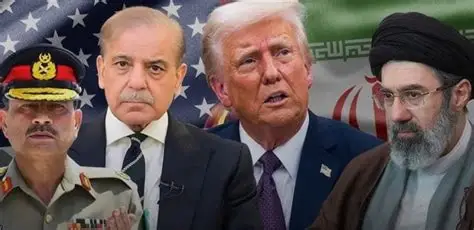
Throughout March, Pakistan positioned itself as the critical mediator. Pakistani Prime Minister Shehbaz Sharif and Army Chief Asim Munir held backchannel conversations with both Trump and Iranian officials, eventually delivering a proposal both sides could accept, at least temporarily.
2. The Ceasefire: What Was Agreed and What Wasn’t
On April 8, 2026, President Trump announced a two-week ceasefire, citing conversations with Pakistani Prime Minister Sharif and Field Marshal Munir as the decisive factor. Iranian Foreign Minister Abbas Araghchi confirmed Tehran’s acceptance and said Iran would allow safe passage of the Strait of Hormuz during the ceasefire period.
What the ceasefire includes: An immediate halt to US and Israeli strikes on Iran, suspension of US military operations in the region, and Iran’s provisional commitment to allow shipping through the Strait of Hormuz under coordination with Iranian armed forces.
What remains disputed: Whether Lebanon is included in the ceasefire. Whether Iran’s frozen assets will be released before talks begin. Who controls the Strait of Hormuz long-term Iran’s non-negotiable demand for sovereignty versus the US demand for free and unimpeded passage.
The fragility is real: By April 9, Iran had again stopped ships moving through the strait, accusing the US and Israel of violating the ceasefire through continued strikes in Lebanon. Talks very nearly collapsed before they began.
| Issue | US Position | Iran Position | Status |
| Strait of Hormuz | Full free passage | Iranian sovereign control | 🔴 Deadlocked |
| Lebanon ceasefire | Not part of deal | Must be included | 🟡 Partial progress |
| Nuclear programme | Must end completely | Non-negotiable right | 🔴 Unresolved |
| Frozen assets | Conditional release | Immediate release required | 🟡 Movement reported |
| War reparations | Not on US agenda | Non-negotiable demand | 🔴 Deadlocked |
3. The Islamabad Talks: What Is Happening Right Now
🕐 LIVE STATUS – April 12, 2026: Negotiations have extended through the night into Sunday morning Islamabad time. Pakistani sources told CNN the overall tone has been ‘largely positive’ but a stalemate persists over Strait of Hormuz control. Iranian state media says this may be ‘Pakistan’s final effort’ to achieve a result from this round.
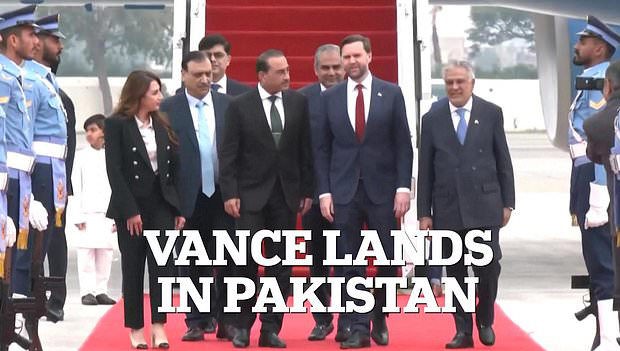
The US delegation is led by Vice President JD Vance, Special Envoy Steve Witkoff, and Jared Kushner, marking the highest-level direct US-Iran engagement since the 1979 Islamic Revolution. The Iranian delegation of 71 people is led by Parliament Speaker Mohammad Bagher Ghalibaf and Foreign Minister Abbas Araghchi.
Pakistan’s role is central. Pakistani mediators are physically present in the same room as the two delegations, the talks have evolved from ‘proximate’ (separate rooms with intermediaries) to genuine direct negotiations. Pakistani PM Sharif declared the talks a moment of ‘remarkable wisdom and understanding’ from both sides.
Saudi, Chinese, Qatari, and Egyptian officials are also in Islamabad, indirectly facilitating the talks, underscoring how much the rest of the world has riding on this outcome.
4. What the Markets Are Telling Us
Financial markets have been the most honest real-time scoreboard of this crisis. When the ceasefire was announced on April 8, the reaction was immediate and dramatic, oil prices plunged 16.4% in a single day, while the Dow Jones had its best single session in over a year. The market had been pricing in prolonged conflict, and the ceasefire repriced that risk instantly.
But the relief has been cautious and incomplete. By April 9, with the Strait still partially closed and ceasefire violations being alleged, oil prices recovered some ground. The market is not yet pricing in a permanent resolution, it is pricing in fragile uncertainty, which is better than active war but far from the stability businesses need to plan.
| Indicator | Pre-War (Feb 2026) | Peak War | Post-Ceasefire Now |
| Brent Crude Oil | Under $70/barrel | $120+/barrel | ~$90/barrel |
| US Gas Prices | ~$3.00/gallon | $3.60+ avg | Elevated |
| LA Gas Prices | ~$4.00/gallon | $6.50+/gallon | Above $5 |
| Dow Jones | Strong | -5% since war | Partial recovery |
| Oil plunge on ceasefire | — | — | -16.4% in one day |
Qatar also announced on April 12 that maritime navigation will fully resume for all vessel types in the Persian Gulf starting Sunday morning, a significant development that could unlock the first meaningful restoration of regional shipping since the war began.
5. What a Permanent Deal Would Mean for the Global Economy
A successful permanent peace agreement from the Islamabad talks would trigger one of the fastest positive economic pivots in modern history. Here is exactly what resolves and how fast:
| What Resolves | Timeline | Economic Impact |
| Strait of Hormuz reopens fully | Days | Oil drops toward $70–75/barrel |
| Gulf shipping insurance restored | 1–2 weeks | Global shipping costs normalise |
| Fertiliser supply from Gulf restored | 2–4 weeks | Food price pressure eases |
| Consumer goods prices moderate | 4–8 weeks | Inflation pressure reduces |
| Fed rate cut expectations return | 1–3 months | Equities rally, USD softens |
| Global trade volumes recover | 3–6 months | EM economies accelerate |
6. Three Scenarios and What Each Means for Your Business
Scenario A: Full Peace Deal (Probability: 30%)
A permanent agreement is reached in Islamabad or within the two-week ceasefire window. The Strait reopens fully, sanctions are eased, and Iran’s nuclear programme is constrained. Oil drops back toward $70–75 per barrel. Consumer prices begin reversing within 4–8 weeks. Business confidence rebounds sharply. This is the best-case scenario and the one markets would react to most dramatically.
Business action now: Lock in energy and freight contracts now at current elevated rates before a deal causes rapid cost compression that competitors haven’t yet priced in.
Scenario B: Fragile Extended Ceasefire (Probability: 50%)
Talks produce a framework but not a final deal. The ceasefire is extended, the Strait partially reopens, but deep disputes over sovereignty, Lebanon, and nuclear constraints remain unresolved. Oil stabilises in the $80–90 range. Shipping partially normalises but insurance premiums remain elevated. Business planning remains constrained by uncertainty.
Business action now: Treat the current environment as the new normal for 90 days. Build pricing models that work at $85–90 oil. Accelerate supply chain diversification away from Gulf dependency.
Scenario C: Ceasefire Collapse (Probability: 20%)
Talks break down, most likely over Strait of Hormuz sovereignty or Lebanon. The ceasefire ends, strikes resume, and oil spikes back above $100 or higher. The stagflation risk that economists warned about in March becomes the dominant economic story of Q2 2026.
Business action now: Have a contingency plan ready. Businesses with significant energy exposure should model their P&L at $120 oil today. Identify the 3 cost lines in your business most exposed to energy price spikes and have mitigation actions pre-approved.
7. Pakistan’s Historic Role and What It Means for Global Business
Whatever the outcome of the Islamabad talks, Pakistan has permanently elevated its position in global geopolitics. No other country maintained the trust of both Washington and Tehran simultaneously. No other country had the military and diplomatic relationships required to bring both delegations to the same table.
For the business world, Pakistan’s emergence as a critical geopolitical mediator signals a broader shift: the multipolar world is not coming, it is here. Mid-sized powers with strategic positioning (Pakistan, Turkey, UAE, Saudi Arabia) are increasingly the decisive actors in global crises, not just the US and China.
This shift has direct implications for international business strategy. For entrepreneurs considering emerging market expansion, Pakistan, Turkey, and the UAE are increasingly attractive not just as consumer markets but as strategic hubs in a fragmenting global order.
| 🚨 What Every Business Owner Should Do Right Now 1- Review your energy and fuel cost exposure, model your P&L at $90 and $120 oil. 2- Audit your supply chain for Gulf dependency, fertiliser, chemicals, and shipping routes. 3- Prepare two pricing scenarios for Q2 2026, one for ceasefire stability, one for collapse. 4- Watch Qatar’s shipping resumption announcement for the first real signal on Hormuz. 5- Consider locking in freight and energy contracts now if your scenario is Scenario A. |
Frequently Asked Questions
Q1: What is the US-Iran ceasefire 2026 and why does it matter?
The US-Iran ceasefire of 2026 is a two-week pause in fighting between the US, Israel, and Iran, announced on April 8 and brokered by Pakistan. It matters because the war triggered the world’s largest oil supply disruption since the 1970s energy crisis, closing the Strait of Hormuz and sending oil above $100 per barrel. A permanent deal would reverse these economic shocks across global trade, consumer prices, and financial markets.
Q2: Why is Pakistan mediating US-Iran talks?
Pakistan was able to mediate the US-Iran ceasefire because it maintains rare simultaneous relationships of trust with both Washington and Tehran. Pakistan’s Prime Minister Shehbaz Sharif and Army Chief Asim Munir had direct access to President Trump and Iran’s leadership. No other country, not China, not the UN, not Qatar had the credibility with both sides to bring them to the same table. The talks in Islamabad on April 11-12, 2026 represent the first direct US-Iran negotiations since the 1979 Islamic Revolution.
Q3: What happens to oil prices if the ceasefire becomes a permanent peace deal?
If the US-Iran ceasefire leads to a permanent deal and full reopening of the Strait of Hormuz, analysts expect oil prices to fall back toward $70–75 per barrel from current levels near $90. The single-day drop of 16.4% in oil futures when the ceasefire was announced on April 8 gives the clearest indication of how dramatically prices would fall if a permanent resolution is achieved.
Q4: What is the Strait of Hormuz and why is it the key issue in negotiations?
The Strait of Hormuz is a narrow waterway between Iran and Oman through which roughly one-fifth of the world’s daily oil supply, approximately 12 to 15 million barrels per day, normally passes. Iran closed the strait when the war began, triggering a global energy crisis. Control of the strait is the central sticking point in the Islamabad negotiations: the US demands completely free passage while Iran insists on sovereign control as a non-negotiable condition.
Q5: How does the US-Iran war affect businesses outside the Middle East?
The US-Iran war affects businesses globally through five primary channels: higher energy costs (fuel, electricity, transportation), higher food prices (fertiliser supply from the Gulf is disrupted), increased shipping costs and delays, reduced consumer spending power as households spend more on necessities, and elevated inflation that reduces the likelihood of central bank rate cuts. Businesses in trucking, food production, retail, and any supply chain touching Gulf shipping routes face the most direct exposure.
Q6: What are Iran’s non-negotiable demands in the Islamabad talks?
Iran’s four stated non-negotiable conditions in the Islamabad talks are: full Iranian sovereignty over the Strait of Hormuz, complete war reparations from the US and Israel, unconditional release of Iran’s frozen assets, and a durable ceasefire covering the entire West Asia region including an end to Israeli operations in Lebanon. The US has rejected several of these conditions, particularly the Hormuz sovereignty demand, creating the central deadlock in negotiations.
Q7: When will the Strait of Hormuz fully reopen?
As of April 12, 2026, the Strait of Hormuz remains largely closed, with only limited ship traffic permitted under Iranian coordination. Qatar announced on April 12 that maritime navigation in the Persian Gulf would resume for all vessels from Sunday morning, a partial positive signal. Full reopening of the Strait depends entirely on the outcome of the Islamabad talks. Analysts estimate that even after a deal, it could take weeks for normal shipping volumes to resume and months for insurance markets and supply chains to fully normalise.
Q8: Is now a good time to invest given the US-Iran ceasefire uncertainty?
The ceasefire has created a narrow window where risk assets have partially recovered the Dow had its best day in a year on April 8. However, the situation remains fragile, with talks still ongoing and multiple scenarios possible. Most institutional investors are positioned cautiously, watching the Strait of Hormuz reopening as the key market signal. For long-term investors, the energy and defence sectors offer clear thematic exposure regardless of outcome. For business owners, the priority is scenario planning rather than investment decisions.
Conclusion: The World Is Watching Islamabad
What happens in the next 48 hours in Pakistan will determine the economic trajectory of the rest of 2026. A permanent deal reopens the Strait, reverses the oil shock, and removes the stagflation threat that has been hanging over the global economy since February 28. A ceasefire extension kicks the resolution down the road but preserves stability. A collapse sends oil back above $100 and puts the global economy on a path that central banks have few tools to manage.
For businesses, the lesson of the past six weeks is clear: geopolitical risk is no longer a tail risk to be noted in annual reports. It is an active, week-to-week variable that directly affects costs, supply chains, consumer spending, and market conditions. The businesses that are building resilient, diversified operations not just optimised for the world before February 28 are the ones that will emerge from 2026 strongest.
TalkToGlobe will update this article as the Islamabad talks develop. Bookmark this page.
For the complete picture of how this geopolitical crisis is reshaping global business, visit TALKTOGLOBE, the world’s best rising business and global market magazine.
